What Information Do I Need Before Building a Report?
You do not need a finished workforce strategy before ordering. You only need enough information to define the hiring question you want the report to answer.
Start With These Four Things
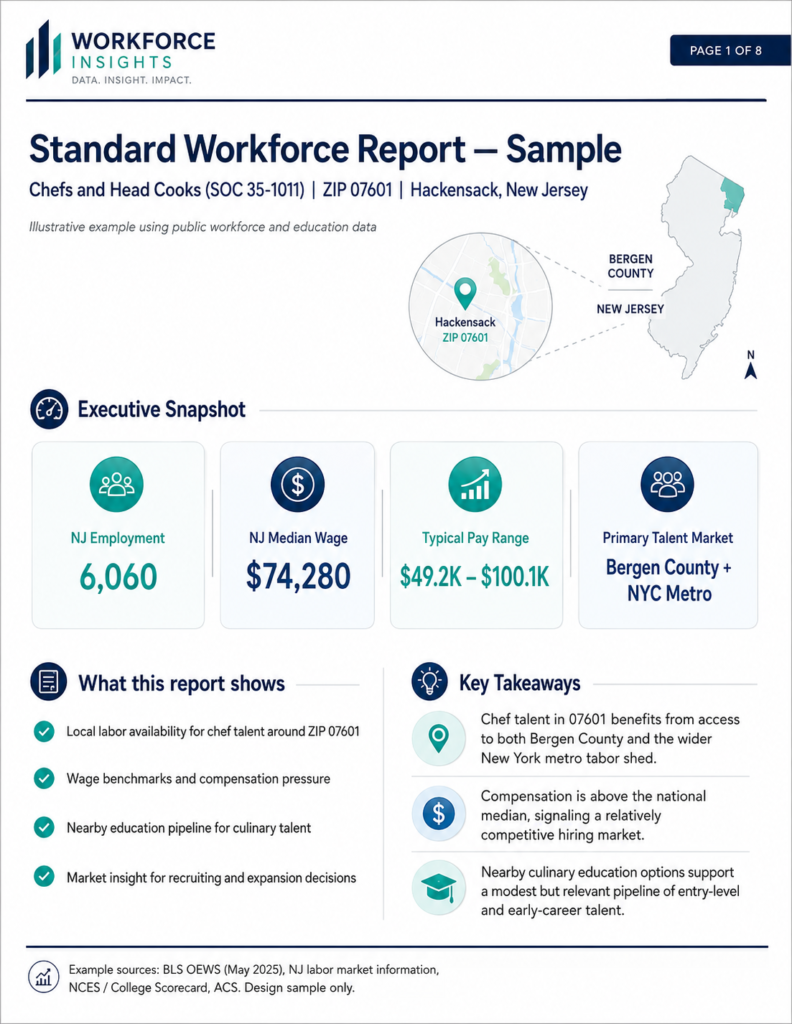
Location
The ZIP code, city, county, state, or other location you want analyzed.
Occupation
The job or workforce you expect to hire.
Hiring Need
The approximate number of employees you expect to hire.
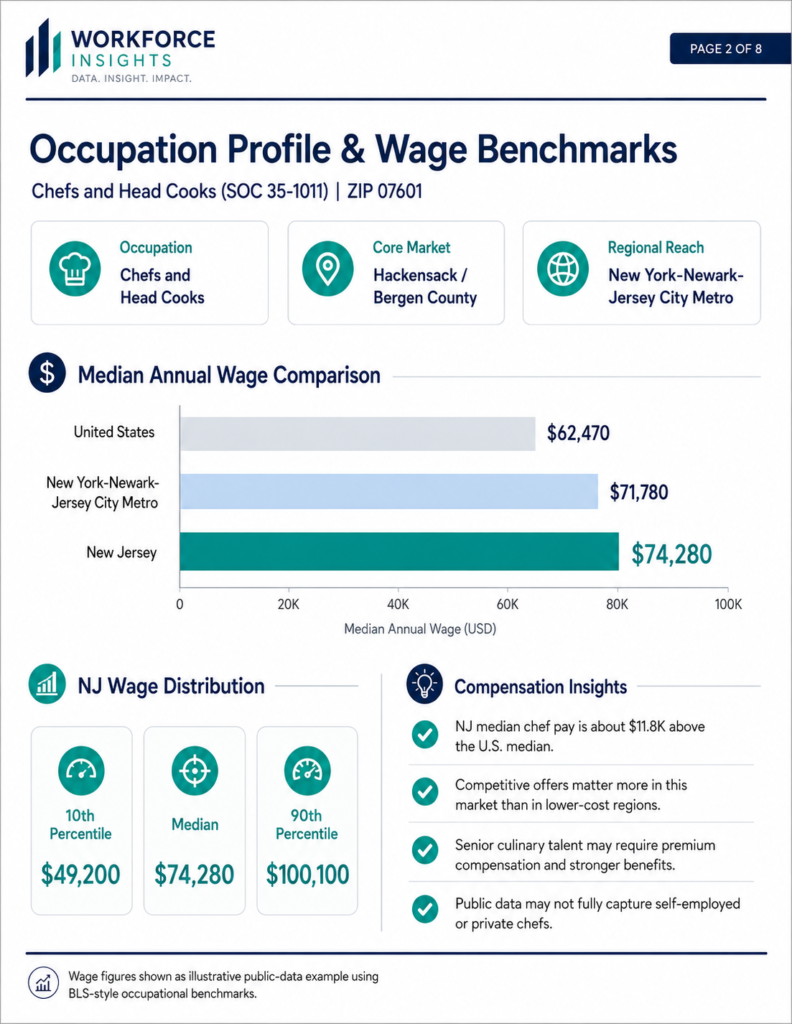
Compensation
Your proposed hourly wage or annual salary, when compensation is relevant to the project.
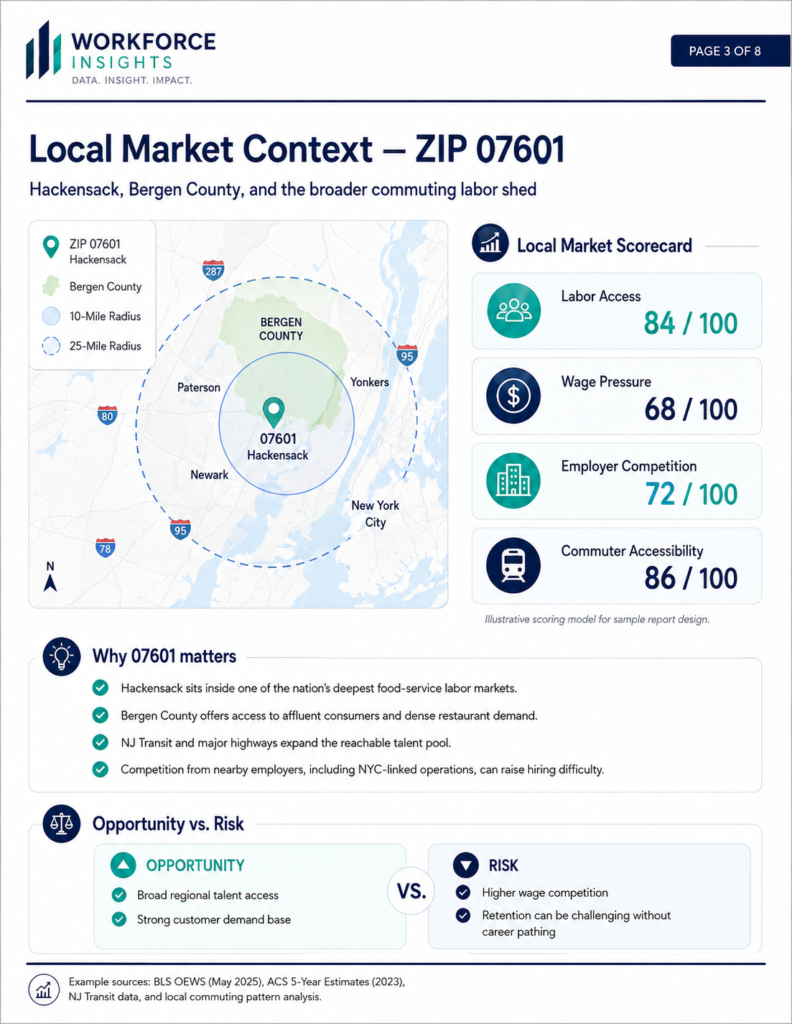
Location Details
Your workforce market is not always the same as a city boundary. Depending on the report you choose, the analysis may evaluate workers, employers, schools, wages, competition, or other conditions within a defined labor-market area.
Occupation Details
Job titles can vary from company to company. One employer may use a title that another employer uses for a completely different role.
Where’s My Workforce uses standardized occupational classifications to identify the workforce that best represents the job being analyzed.
A company may internally use the title Production Technician, but the actual work could align more closely with machinists, industrial machinery mechanics, assemblers, or another standardized occupation.
Hiring Need
The number of employees you expect to hire provides important context. A market that can support five hires may not be equally capable of supporting fifty.
Your hiring need can affect how workforce availability, competition, recruiting difficulty, and recommendations are interpreted.
Compensation
If you provide a proposed wage or salary, Where’s My Workforce can evaluate it against relevant compensation benchmarks for the selected occupation and market.
May make recruiting more difficult or reduce the reachable candidate pool.
Generally positions the opportunity within the prevailing compensation environment.
May strengthen recruiting competitiveness but can increase labor cost.
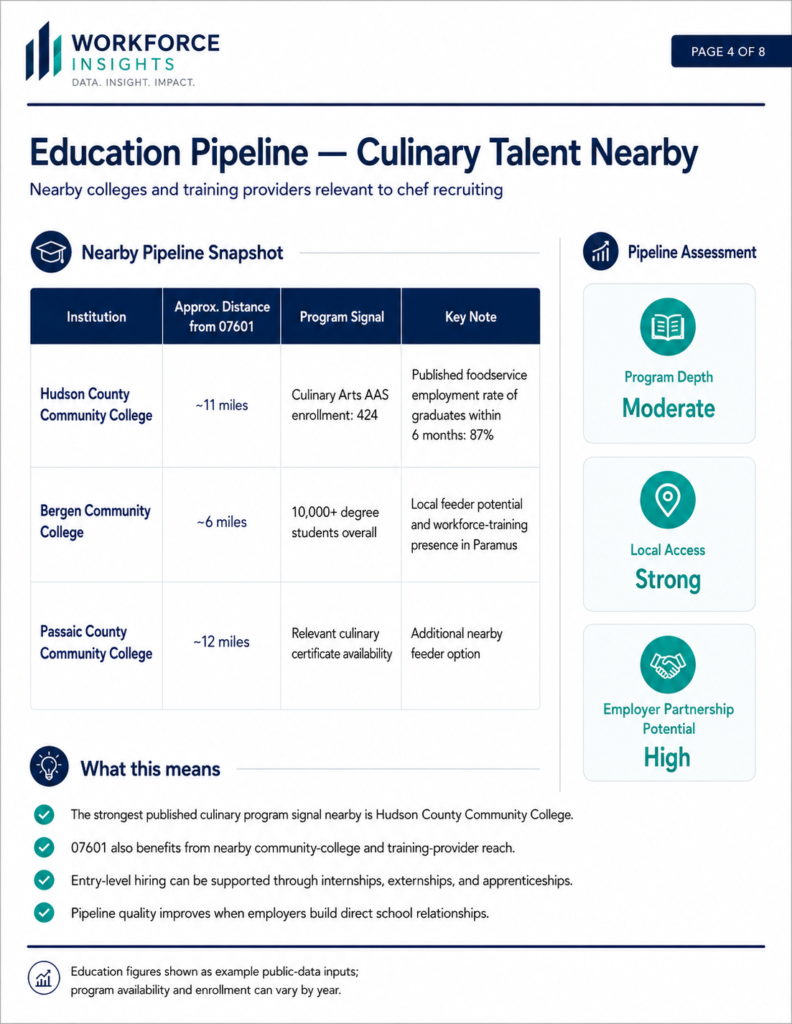
Additional Information
Depending on the modules you choose, you may also be asked for information such as:
- Industry
- Experience level
- Additional comparison locations
- Additional occupations
- Project notes or special considerations
Use the best information you have today. Your report is designed to help you evaluate the decision, not require you to have already made it.