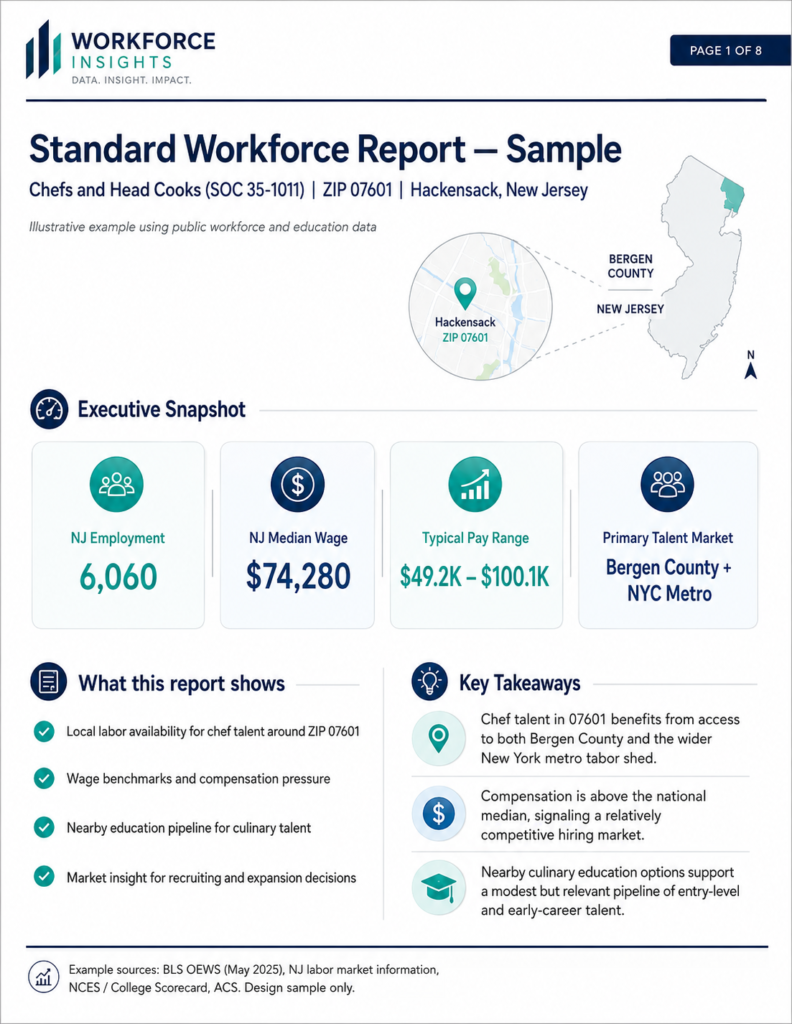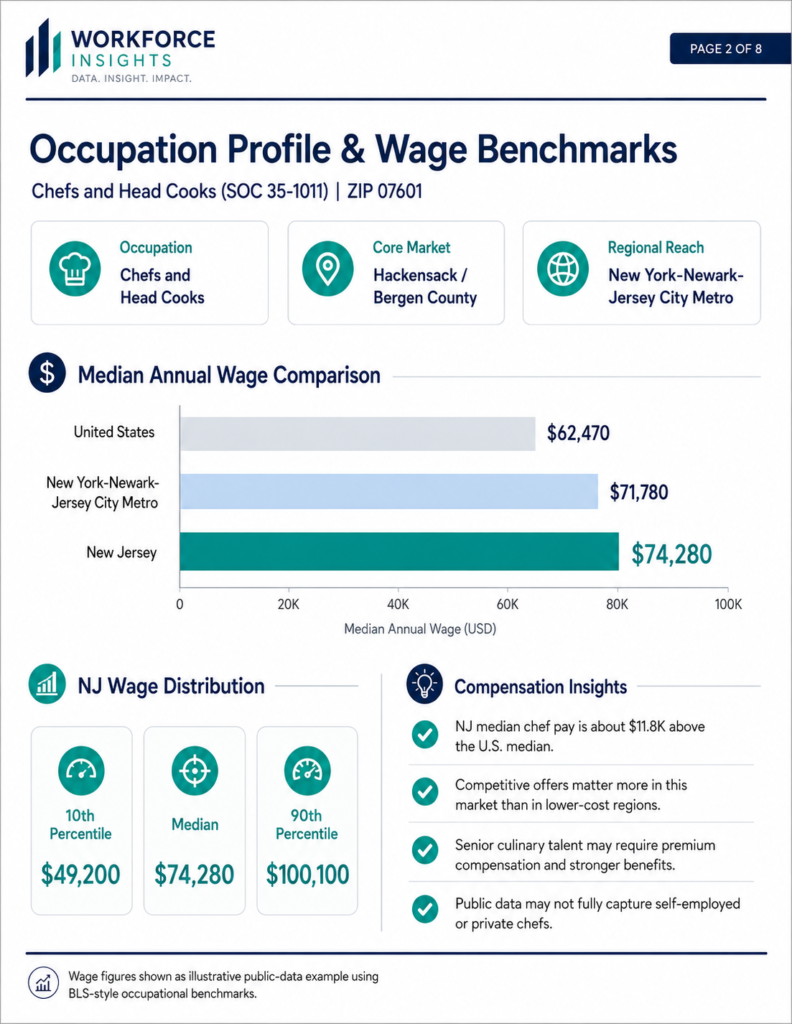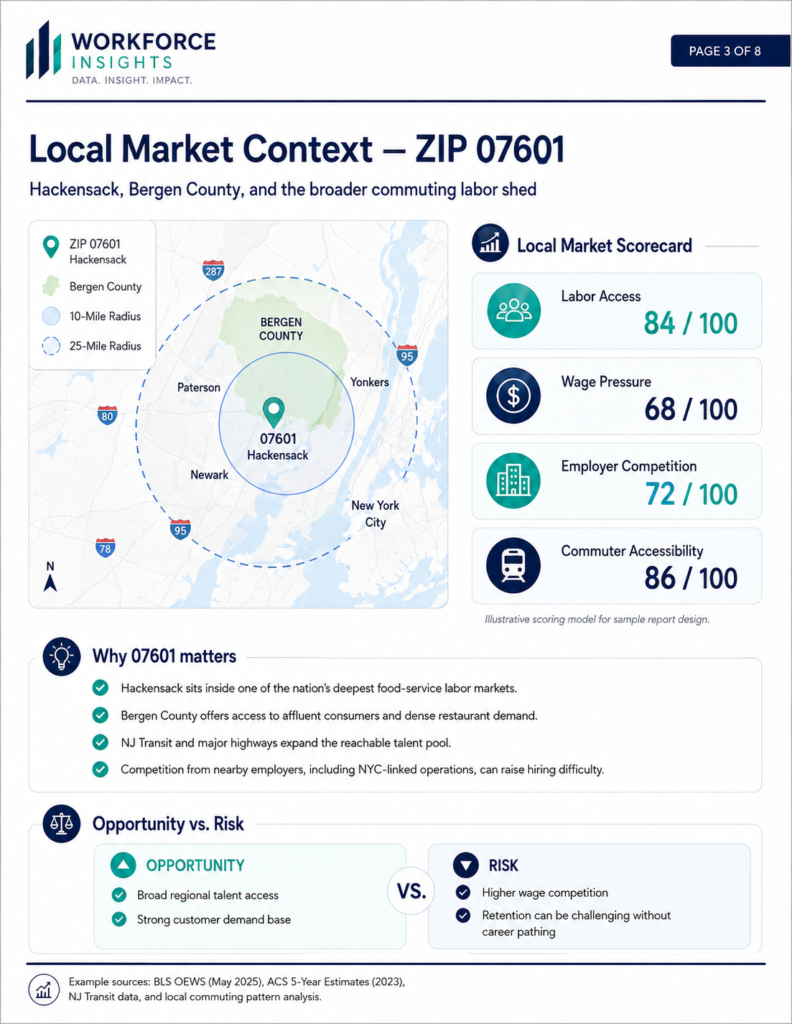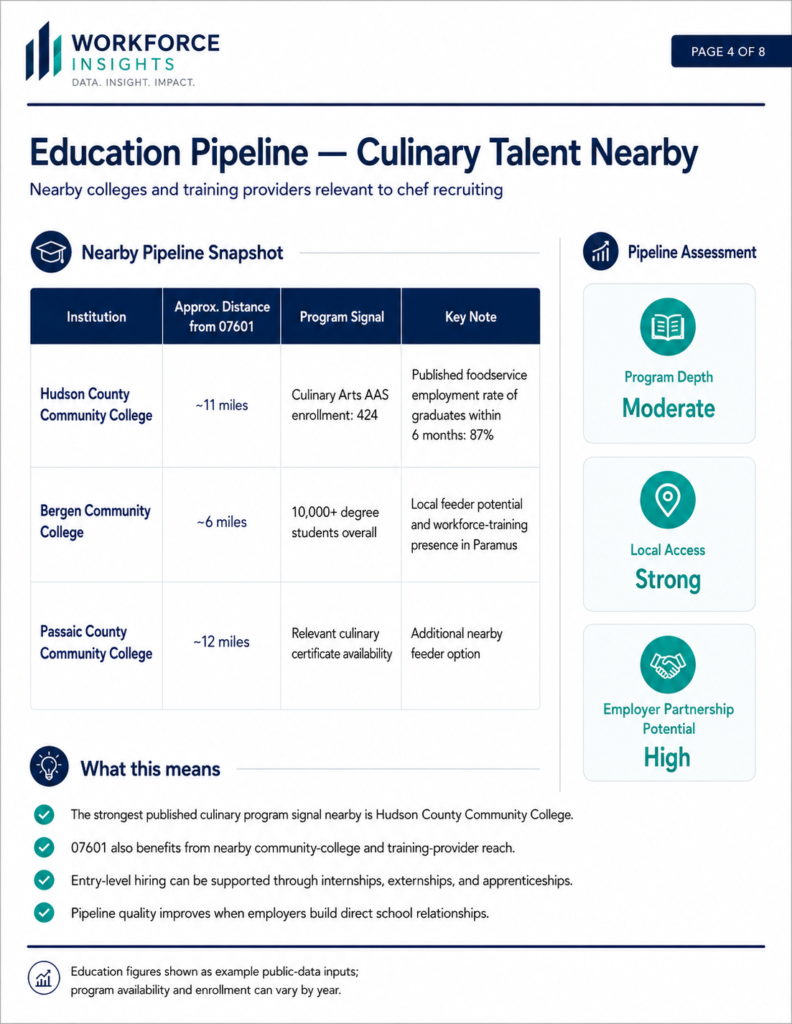
How Do I Choose the Right Location, Radius, and Occupation?
Two of the most important choices in your report are the geographic market and the occupation being analyzed. Together, they define which workforce your results represent.
Choosing the Right Location
Start with the place where the hiring decision is expected to occur. This could be an existing facility, a planned location, or an area being considered for expansion or site selection.
Use the most precise location available.
Use consistent geographic definitions so the locations can be evaluated fairly.
Why Radius Matters
Workers do not stop at municipal boundaries. A company may recruit from surrounding communities, neighboring counties, or a broader commuting market.
A radius-based analysis helps define the realistic area from which workers, competitors, schools, or other market factors may influence the hiring environment.
Gives a tighter view of the immediate labor market.
Captures a broader recruiting and commuting environment.
Choosing the Right Occupation
The occupation should represent the work employees will actually perform—not simply the internal title used by your company.
Where’s My Workforce relies on standardized occupational classifications so employment, wages, education requirements, and labor-market conditions can be compared consistently.
If your company uses the title Advanced Manufacturing Specialist, the underlying duties may align with machinists, CNC operators, industrial machinery mechanics, or another occupation.
What If I Am Not Sure?
Choose the occupation that most closely reflects the actual responsibilities of the role. Focus on what the worker does rather than what the job title sounds like.
- What are the primary duties?
- What equipment or tools does the employee use?
- What education or training is normally required?
- What type of experience would a qualified candidate typically have?
When to Use Comparisons
If you are deciding between multiple markets or considering more than one possible occupation, comparison modules can help evaluate those alternatives using a common analytical framework.
Your location and occupation choices should describe the workforce market you actually expect to recruit from.