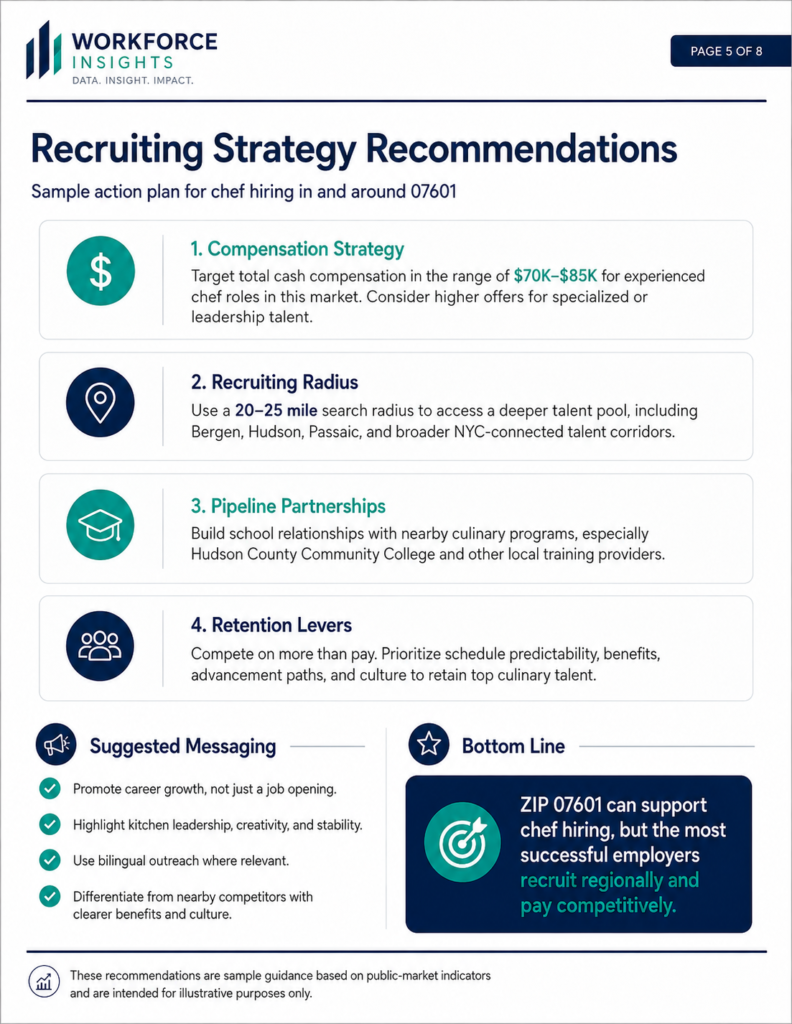
DATA YOU CAN TRACE. ANALYSIS YOU CAN USE.
Better Decisions
Start With Better Data.
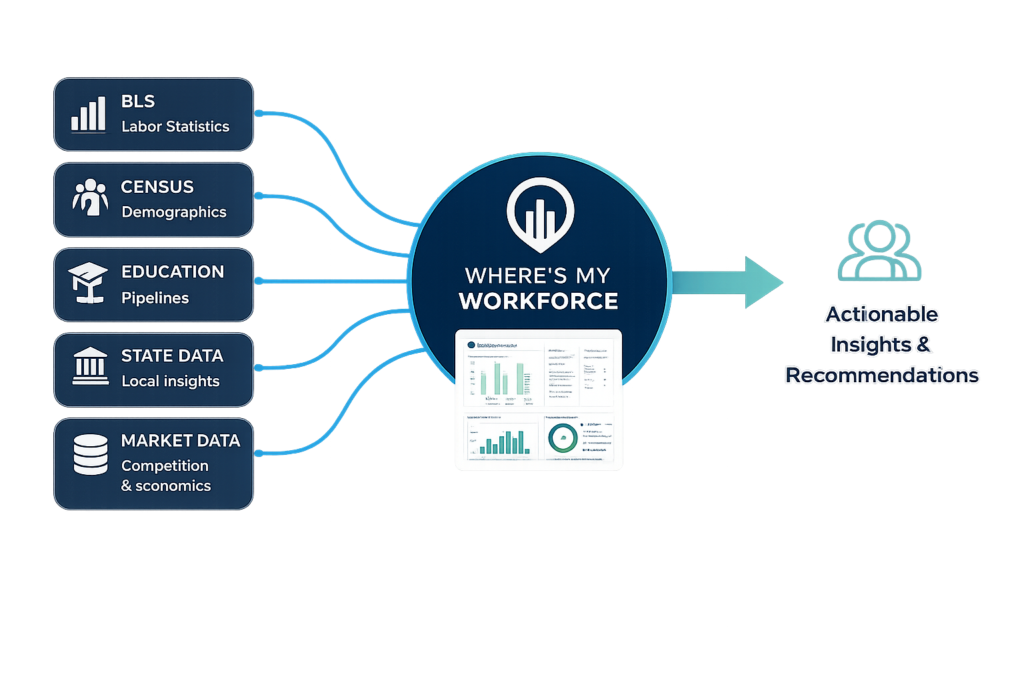
Where’s My Workforce brings together trusted labor, demographic, education, economic, and market data to evaluate the workforce conditions that matter to your hiring decisions.
We turn those datasets into location- and occupation-specific insights, then translate the findings into practical recommendations you can use.
Built on Trusted
Data Sources.
We use authoritative public datasets and relevant industry sources selected according to the analysis being performed. Every report identifies the sources used so you can understand where the findings came from.
U.S. Bureau of Labor Statistics
Employment, occupation, wage, industry, and labor market statistics used to evaluate workforce supply and compensation conditions.
U.S. Census Bureau
Population, demographic, commuting, geographic, and workforce characteristics used to understand the people and communities surrounding a location.
O*NET
Occupation definitions, skills, knowledge, abilities, education, and work characteristics used to understand the requirements of specific jobs.
Education Data
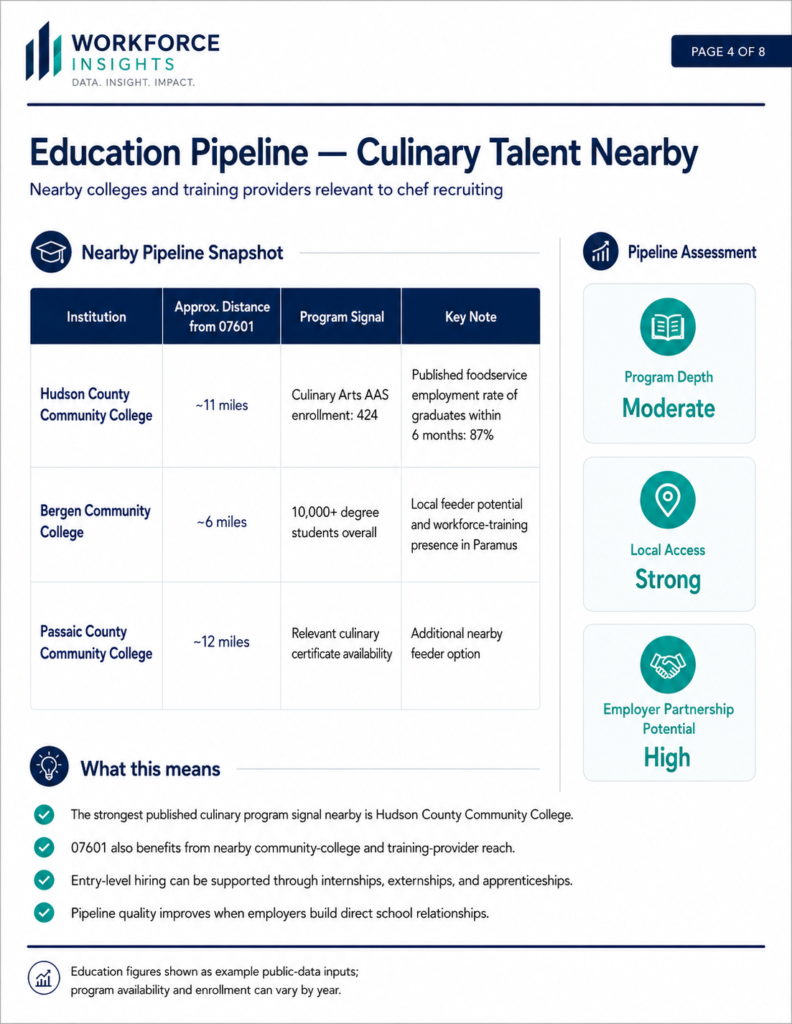
Postsecondary institutions, programs, completions, and educational pipelines used to evaluate how effectively a market is developing future talent.
State & Local Sources
State labor agencies, workforce organizations, economic development authorities, and other regional sources provide additional local context.
Additional Market Sources
Relevant industry, employer, economic, incentive, and market sources may supplement government datasets when additional context is needed.
Sources vary by module. Not every dataset is used in every report. We select sources according to the location, occupation, industry, and analyses included in your order.
How We Turn Data Into Decisions.
Define Your Project
Location • Radius •
Occupation • Hiring Need •
Compensation
Your selections establish the specific labor market and hiring conditions to be analyzed.
Gather Relevant Data
Government • Education •
Economic • Market
Relevant datasets are selected and assembled for your geography, occupation, and chosen analyses.
Analyze the Market
Supply • Pay • Competition •
Pipeline • Trends
The data is compared, calculated, and evaluated to identify meaningful workforce conditions.
Add Context
Benchmarks • Comparisons •
Risks • Opportunities
Individual statistics are interpreted in relation to the broader market rather than presented in isolation.
Recommend Action
Findings • Implications • Recommendations
The analysis is translated into practical guidance designed to support your hiring or location decision.
Your Labor Market
Isn’t Defined by
a City Limit.
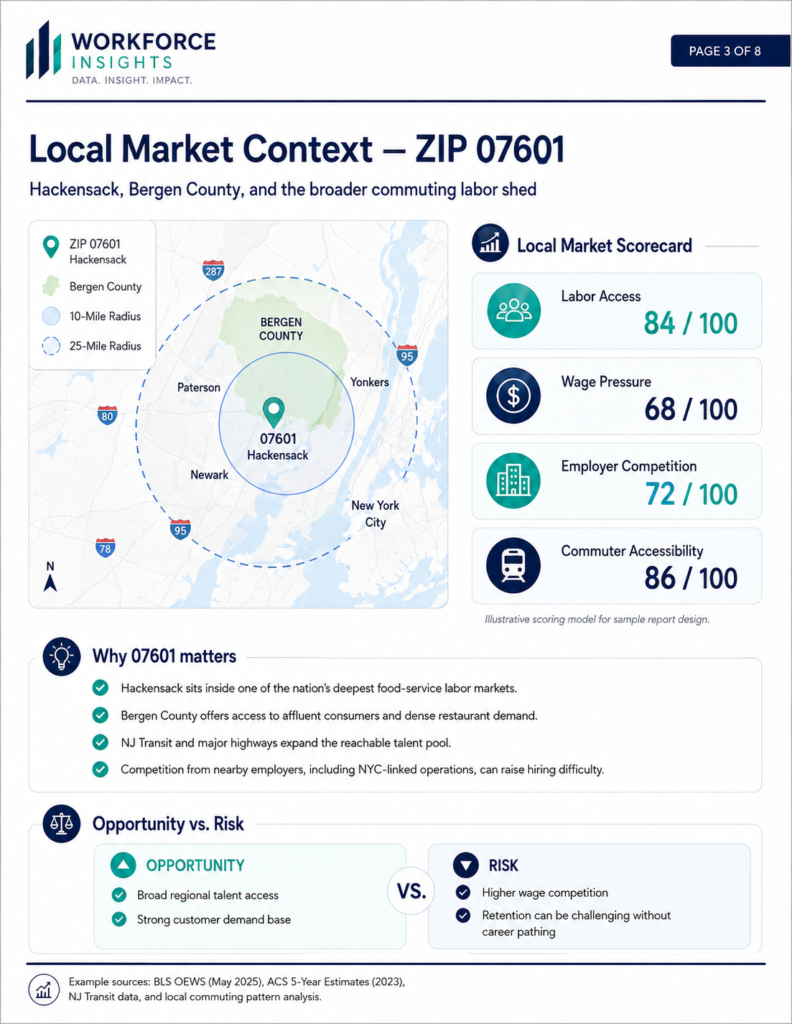
Workers, employers, schools, and competing opportunities don’t stop at municipal boundaries. Where’s My Workforce allows you to define the geographic area that actually matters to your hiring project.
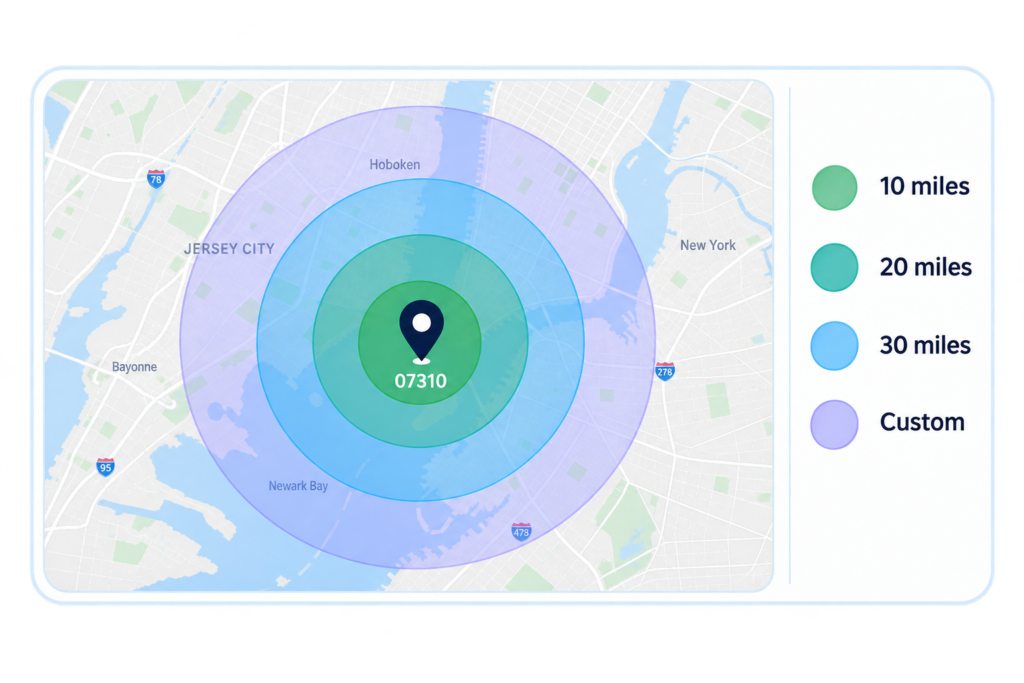
Location-Based Analysis
Depending on the selected module and available source data, analysis may incorporate information at different geographic levels to build the most relevant picture of your target market.
Why this matters:
Two businesses located only a few miles apart can compete for substantially different labor pools depending on commuting patterns, transportation access, population density, and the radius from which workers can realistically be recruited.
Comparing the Right Workers.
Machinists
SOC 51-4041
Where’s My Workforce uses standardized occupational classifications to identify and analyze the workforce associated with the job selected in your report.
Why SOC Matters
Different job titles can describe similar work—and identical titles can sometimes describe very different jobs.
Standardized occupational classifications help us compare:
Your report identifies the occupation being analyzed
so you know exactly which workforce the statistics represent.
Your Pay Doesn’t Exist in a Vacuum.

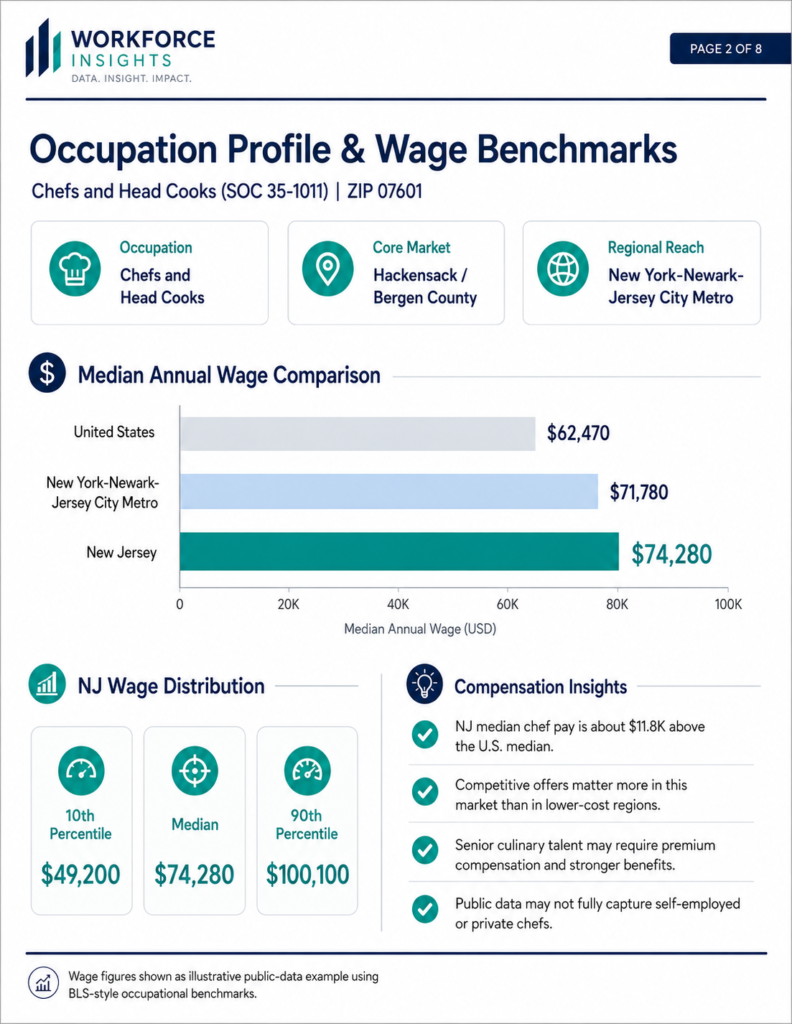
When compensation information is provided, we evaluate it against relevant wage benchmarks for the selected occupation and market.
Below Market
Market Aligned
Above Market
Incentive Eligibility
Some workforce and economic development incentives include compensation, prevailing-wage, benefit, or job-quality requirements. When applicable, the Location Incentives Analysis evaluates the proposed compensation against published program criteria and identifies where pay may strengthen or limit potential eligibility.
Ready to Analyze Your Market?
Choose your location, occupation, hiring needs, and the intelligence that matters to your decision.