Build Your Workforce Intelligence Report
Choose only the workforce insights you need or bundle them into a complete report.
1
What’s your goal?
2
Where is the opportunity?
3
What are you hiring?
4
Which insights do you need?
Each module includes data analysis, visuals, and a branded assessment.
Workforce Fundamentals
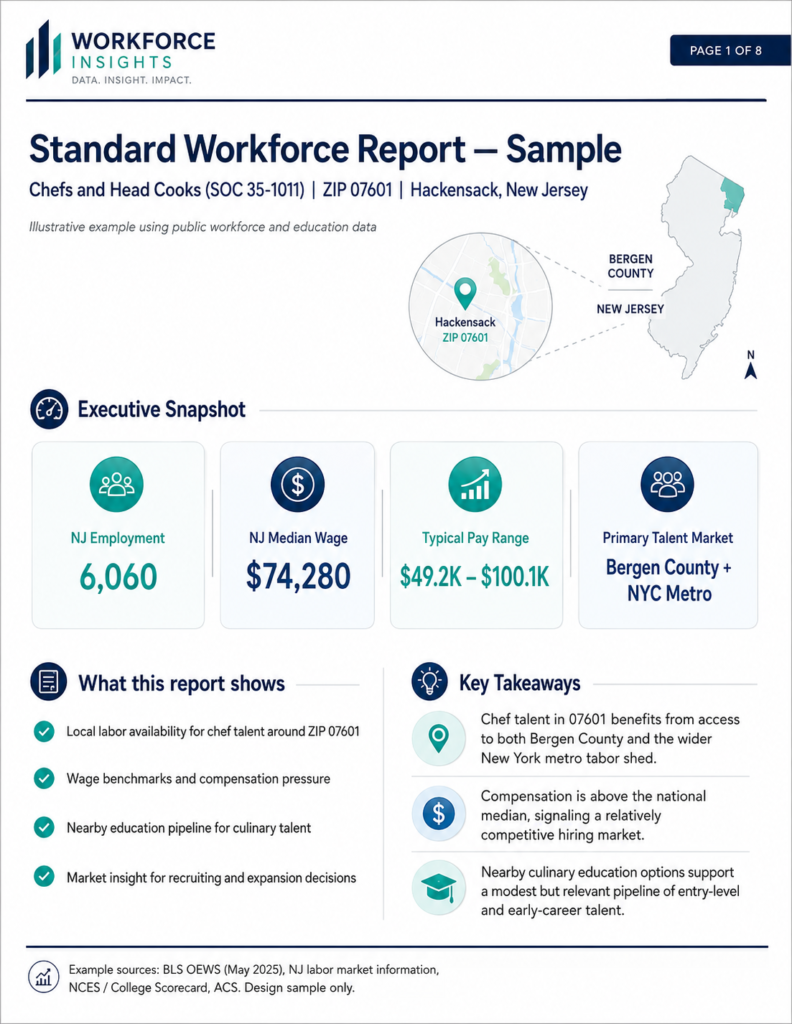
Measure the size, concentration, and availability of your target workforce.
See how much relevant talent exists within your selected market and how concentrated that workforce is locally. The analysis helps determine whether the area has a meaningful pool of workers for your occupation and hiring needs.
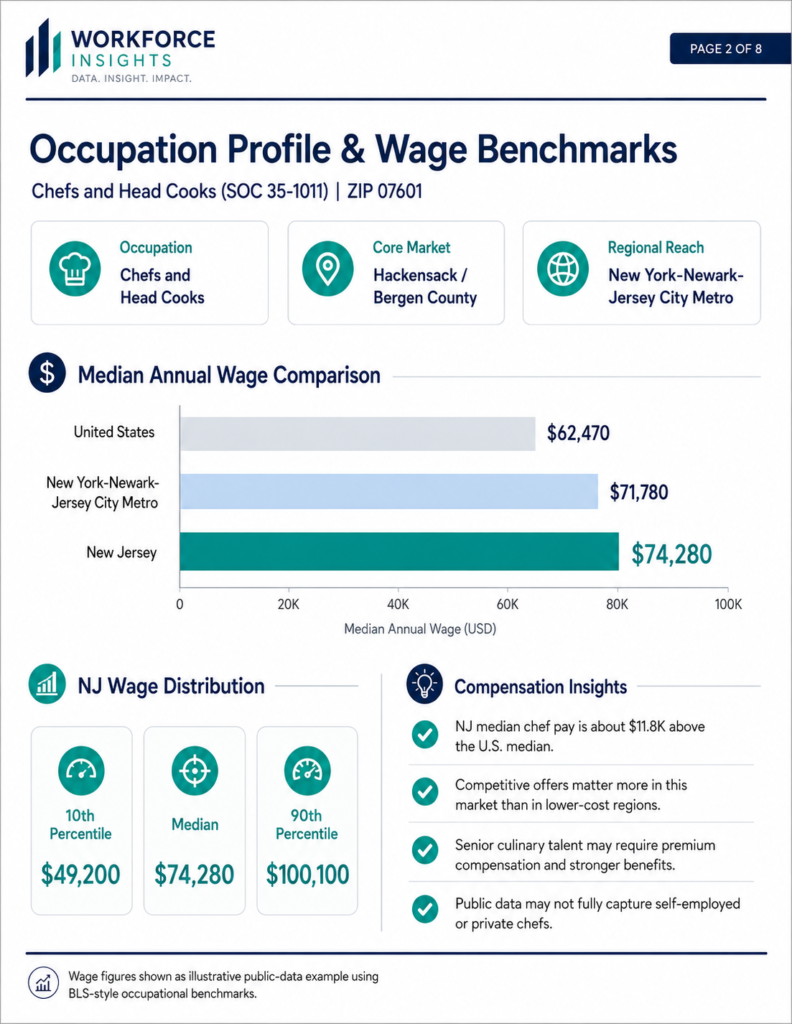
See how your proposed pay compares with the local market.
Compare your selected compensation range with local wage benchmarks for the occupation. See whether your pay is below, aligned with, or above market and how that position could affect recruiting competitiveness.
Identify employers competing for the same workers in your market.
Examine businesses and industries that employ or compete for your target workforce. Understand where competition for talent is concentrated and which employers may influence recruiting and retention conditions.
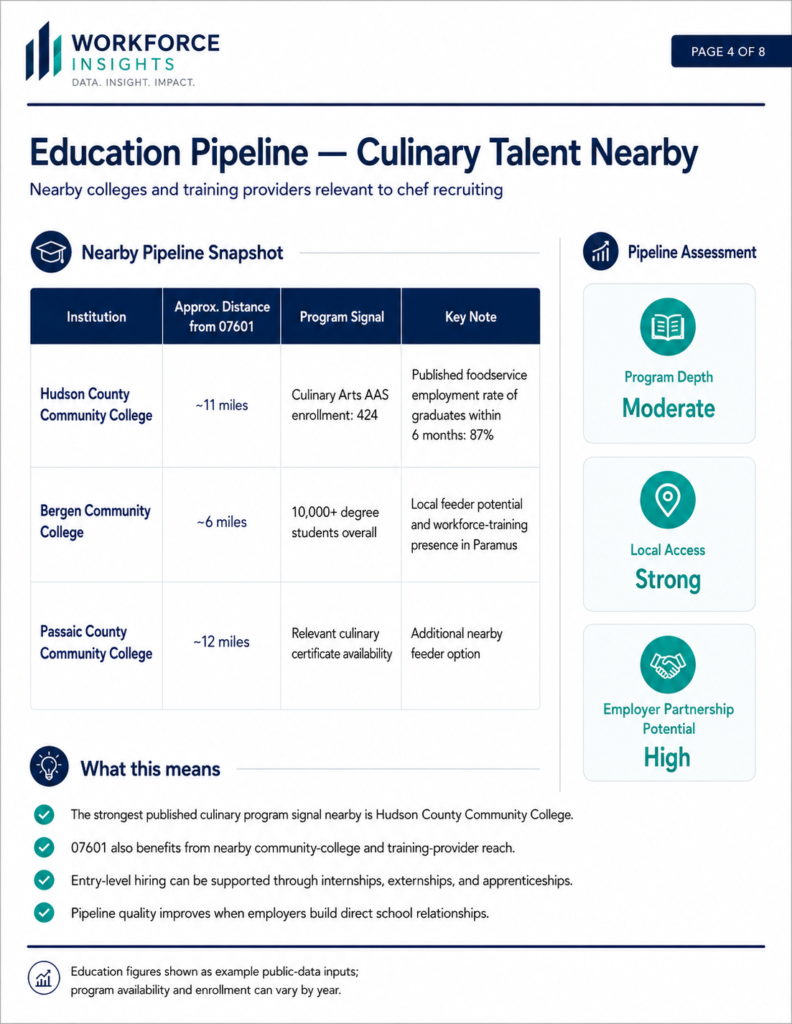
Measure the local pipeline producing future talent for your occupation.
Identify relevant colleges, universities, technical schools, and training programs serving the market. Analyze related program completions and the potential flow of newly trained workers into the local talent pool.
Market Intelligence
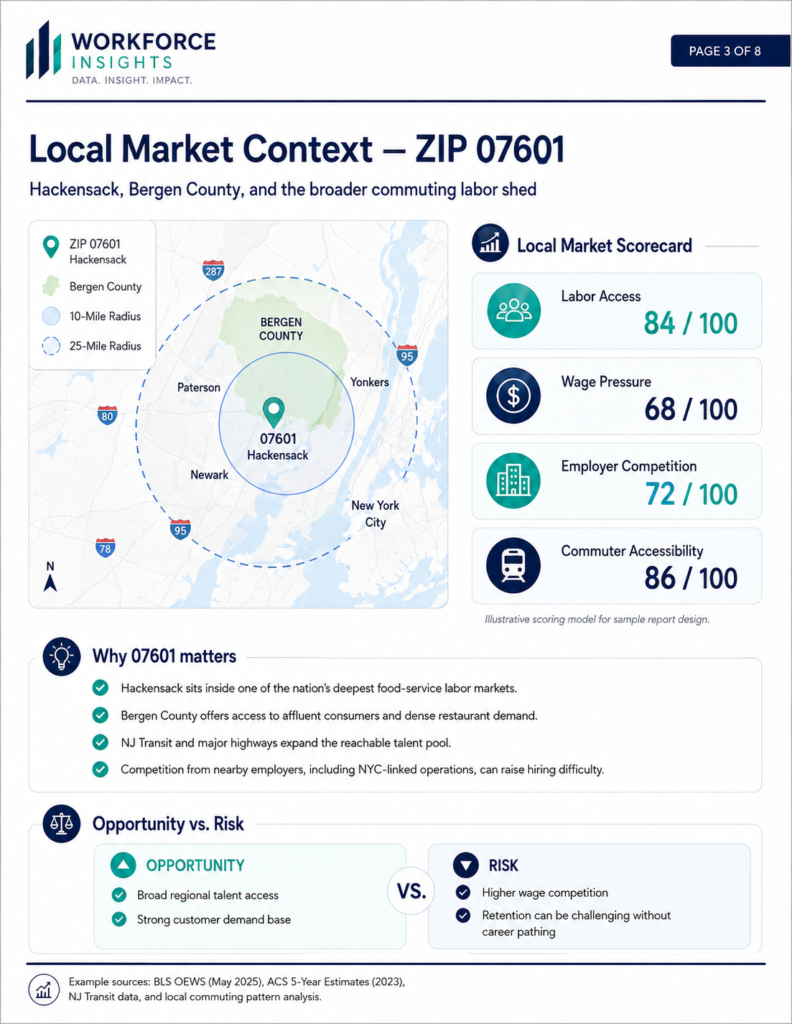
Understand where workers live and how they commute into the market.
Analyze commuting patterns and the geographic reach of the local workforce. See where workers are coming from, how dependent the market is on inbound commuters, and how your selected radius relates to the broader labor shed.
Assess the size, growth, and outlook of your selected industry.
Evaluate the local industry’s employment base, recent performance, concentration, and projected direction. Understand whether the industry is expanding, stable, or contracting within the market.
Track how employment and wages are changing over time.
Examine historical and projected changes affecting your selected occupation, including employment levels, wage movement, growth, and other labor-market trends that can signal increasing or decreasing workforce pressure.
Understand the demographic makeup of your target workforce.
Explore characteristics of workers within the selected occupation and market, helping you better understand the composition of the available workforce and how it compares with broader labor-market patterns.
Comparison & Planning
Compare workforce conditions across multiple locations side-by-side.
Evaluate competing locations using a consistent workforce framework so differences are easy to identify. Compare the factors included in your report and determine which market presents the stronger overall workforce opportunity.
Compare multiple occupations and alternative talent strategies side-by-side.
Evaluate alternative occupations using consistent labor-market measures. Useful when multiple job types, skill profiles, or staffing approaches could potentially meet the same business need.
Identify incentives, tax credits, grants, and workforce funding opportunities.
Research relevant state and local incentives available for your project, including published eligibility requirements, benefits, official program resources, websites, and contact information. Where compensation requirements apply, your proposed pay is evaluated against both program requirements and local occupational wages to help identify potential eligibility advantages or concerns.
Evaluate transportation, freight, broadband, and major market connectivity.
Assess the infrastructure supporting your location, including interstate and highway access, airports, ports, rail and freight connectivity, broadband availability, and access to major markets. The analysis highlights infrastructure advantages and potential constraints that could affect operations and site suitability.
Premium Services
Prioritize your analysis for delivery within two business days.
Receive your report’s underlying datasets in a structured Excel workbook.
Project Notes
5
Secure Checkout